Track 01 of 09
Power
Generate and store your own electricity
Power is the skill most people think of first — and the one where sizing mistakes cost the most money. The good news: off-grid power is a solved problem. Understand the four components (panels, charge controller, battery, inverter), size them honestly against your real usage, and you can build a reliable system without a single mains connection.
What you need to know
The concepts that underpin everything else in this skill.
- Watts, watt-hours (Wh) and kilowatt-hours (kWh) — energy vs power, and why it matters.
- How a solar array, charge controller, battery bank and inverter fit together.
- The difference between DC (12/24/48V battery banks) and AC (household) loads.
- Why battery capacity is measured in amp-hours (Ah) and how voltage changes that math.
- Peak sun hours vs daylight hours — your location's real solar resource.
- The difference between off-grid, grid-tied and hybrid systems.
What you need to learn
A staged progression — master each level before moving on.
Beginner
- 01 Measure your actual daily energy use (kWh) with a plug-in watt meter.
- 02 Read a battery label and a solar panel spec sheet.
- 03 Understand depth of discharge (DoD) and why it limits usable capacity.
- 04 Wire a simple 12V DC circuit safely (fused, correct gauge).
Intermediate
- 01 Size a full solar + battery system using a load audit and sun-hour data.
- 02 Select wire gauge and fusing for DC runs (voltage drop and ampacity).
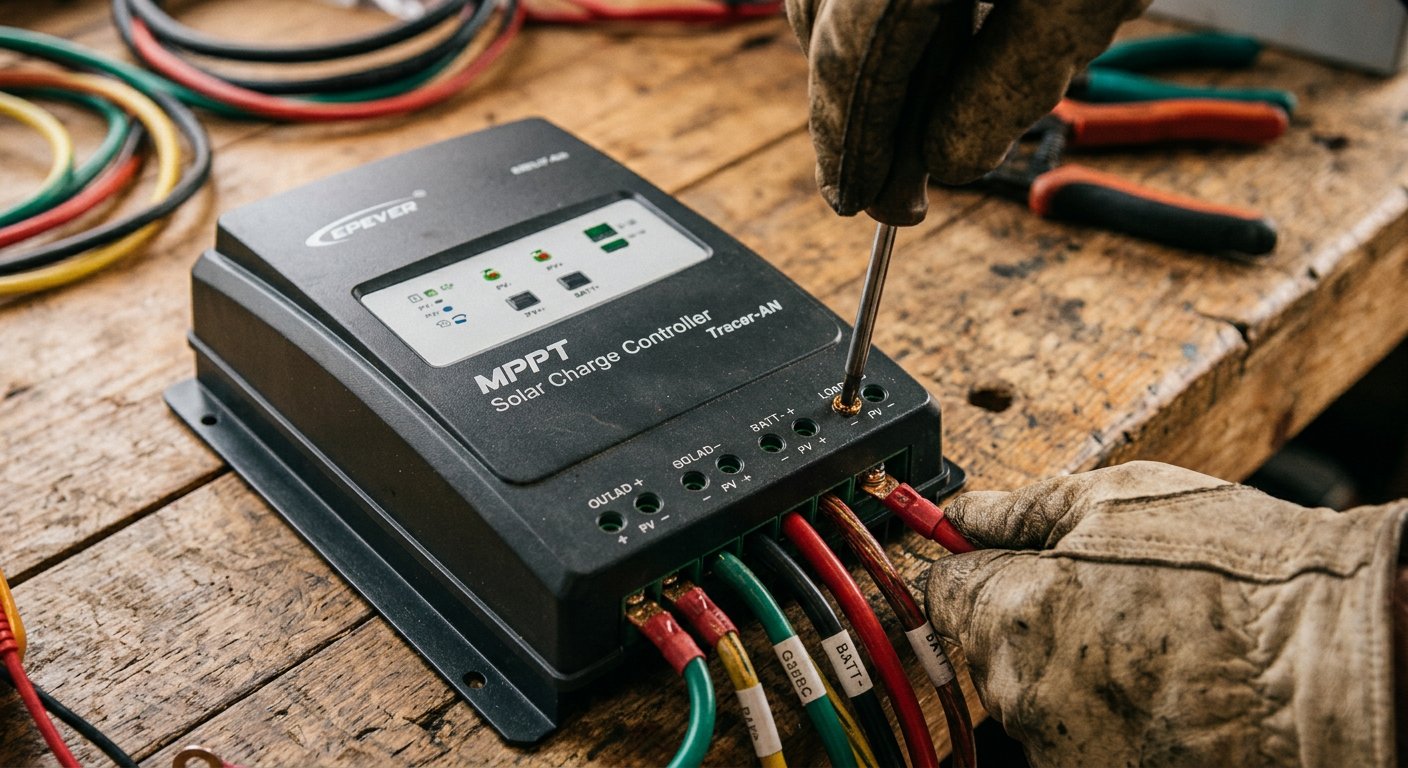
- 03 Configure an MPPT charge controller for your battery chemistry.
- 04 Understand series vs parallel wiring for panels and batteries.
Advanced
- 01 Design a 48V system with split-phase inverter for a full home.
- 02 Integrate a generator, micro-hydro or wind as a backup source.
- 03 Build in low-voltage disconnect, monitoring and surge protection.
- 04 Troubleshoot underperforming arrays (shading, MPPT issues, degradation).
Your next steps
A practical, ordered path from where you are now.
- 1 Do a 7-day load audit with a watt meter — this single step prevents 90% of sizing errors.
- 2 Run the solar sizing calculator to get a first-pass system size.
- 3 Decide your system voltage (12V small / 24V mid / 48V full-home).
- 4 Read the battery sizing guide before buying a single cell.
- 5 Learn DC wiring safety (fusing, gauge, polarity) before touching live equipment.