Track 04 of 09
Shelter
Build a warm, dry, durable home
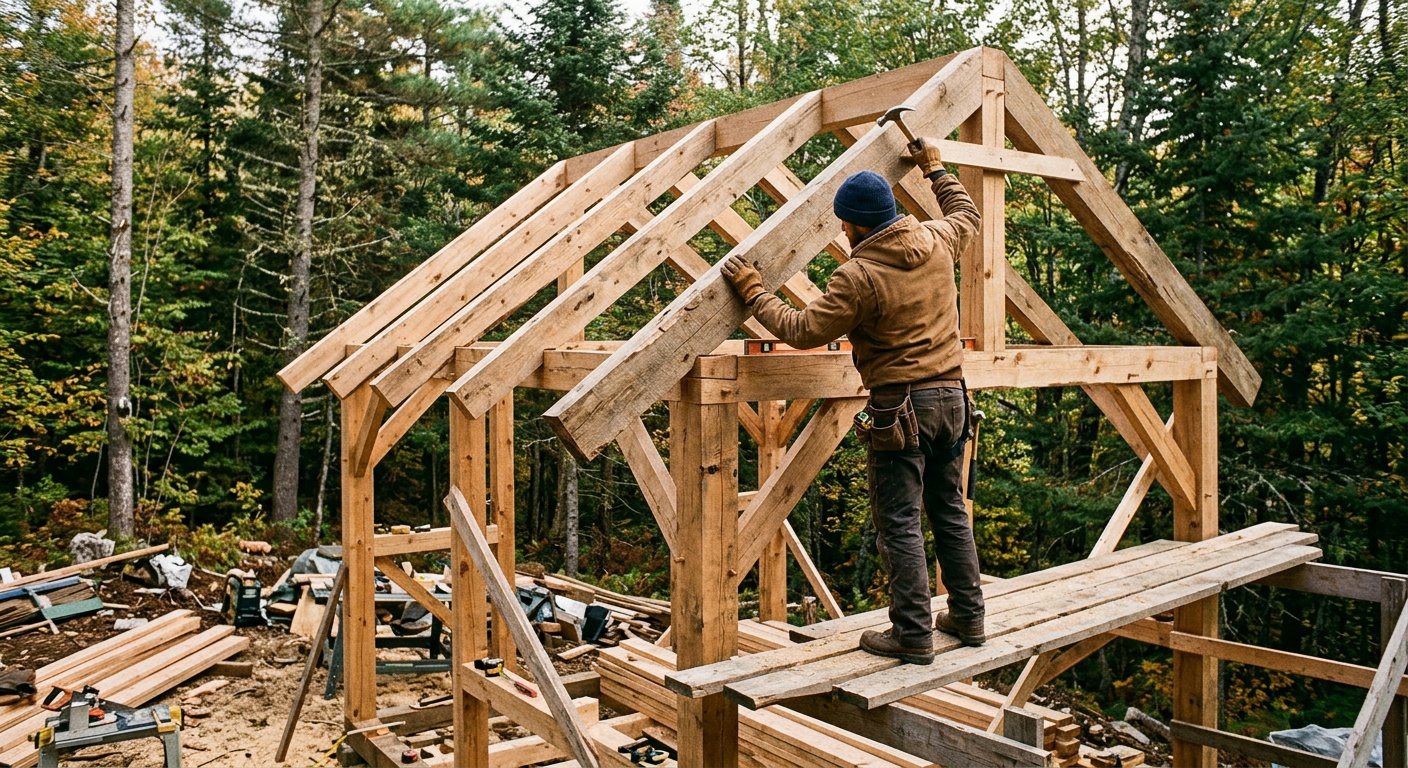
Shelter keeps you warm, dry and safe — and it's where off-grid mistakes get expensive and dangerous. Whether you build a tiny home, retrofit a cabin or camp first, the principles are the same: a dry envelope, proper insulation, good ventilation and a structure that can handle your climate's wind, snow and rain loads.
What you need to know
The concepts that underpin everything else in this skill.
- Your climate's design conditions: temperature extremes, wind, snow and rain loads.
- Building envelope basics: waterproofing, insulation, vapour control, ventilation.
- Passive solar design — orientation, thermal mass, shading.
- Foundation options (slab, piers, skids) and why drainage comes first.
- Building materials: timber frame, SIPs, straw bale, earth, and their trade-offs.
- Tiny homes, cabins, yurts and other alternative structures.
What you need to learn
A staged progression — master each level before moving on.
Beginner
- 01 Read a building plan and understand basic structural terms.
- 02 Frame a simple wall and understand load paths.
- 03 Build a weatherproof roof (underlayment, flashing, ventilation).
- 04 Seal and insulate a small structure correctly.
Intermediate
- 01 Site and orient a building for passive solar and drainage.
- 02 Build a level, well-drained foundation.
- 03 Install windows and doors so they're airtight and plumb.
- 04 Plan and run basic plumbing and drainage (to code).
Advanced
- 01 Design and build a full small home or significant extension.
- 02 Work with natural materials (straw bale, cob, earthbag).
- 03 Detail a building envelope for extreme climates.
- 04 Coordinate engineered systems (structure, electrical, water) to code.
Your next steps
A practical, ordered path from where you are now.
- 1 Define your climate's loads and your budget honestly.
- 2 Decide build vs buy vs retrofit — and start smaller than you think.
- 3 Get your foundation and drainage right before anything else.
- 4 Learn to frame, weatherproof and insulate on a small project first (shed, cabin).
- 5 Engage a designer or engineer for anything structural beyond a basic build.