Track 06 of 09
Waste & Sanitation
Handle human and household waste safely
What you do with waste determines whether you're off-grid or just camping badly. Human waste, greywater and rubbish all need safe, legal handling — and done well, they become resources: compost, soil fertility and less landfill. It's the least glamorous skill and one of the most important.
What you need to know
The concepts that underpin everything else in this skill.
- The difference between blackwater (toilet), greywater (washing) and solid waste.
- Composting toilet vs septic system vs holding tank — and their maintenance.
- Why human waste must be handled differently from animal manure (pathogens).
- Greywater rules: what can and cannot go on the garden, and where it's legal.
- Composting as waste management: browns/greens, temperature, turning.
- Local regulations on on-site wastewater (they vary enormously by region).
What you need to learn
A staged progression — master each level before moving on.
Beginner
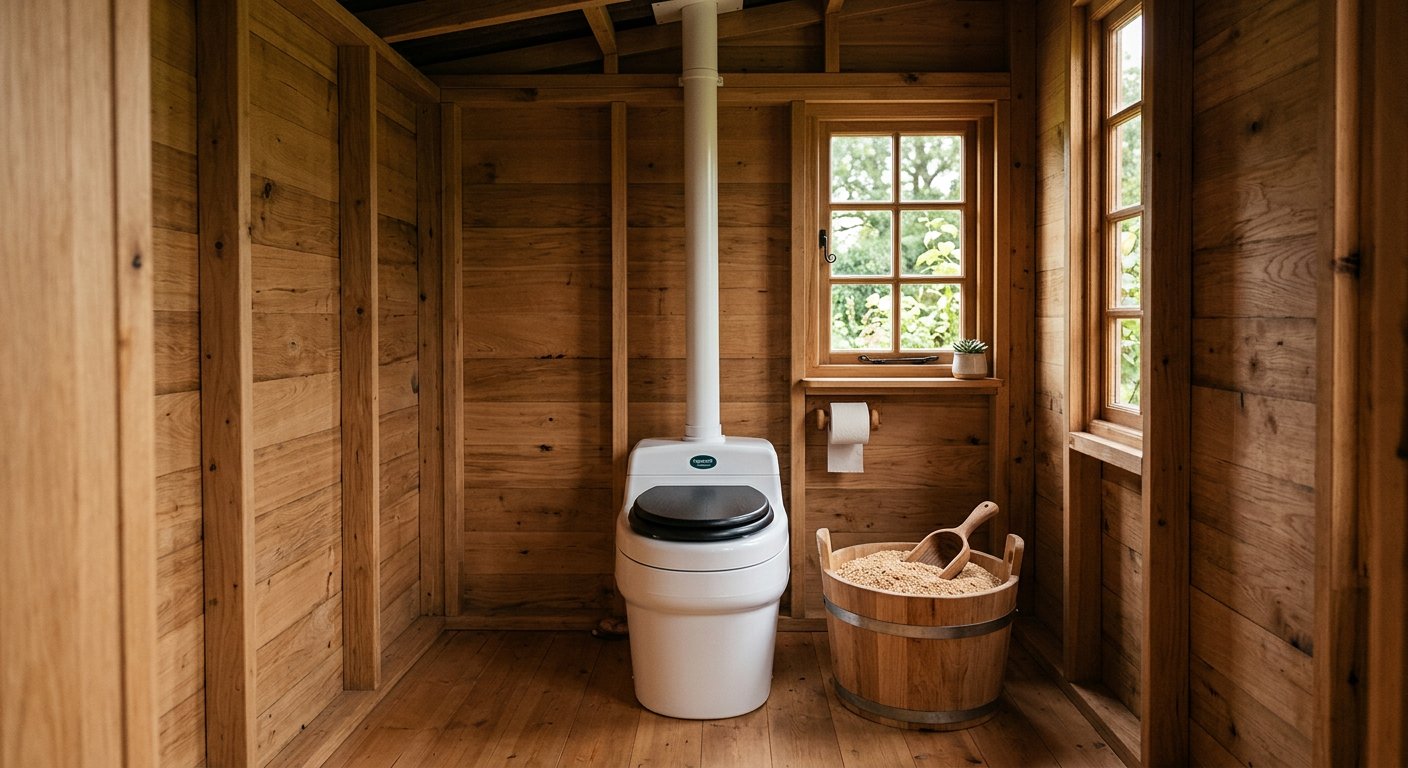
- 01 Run a clean, odour-free composting toilet.
- 02 Build and maintain a hot compost pile.
- 03 Separate and reduce household rubbish (what you don't buy, you don't dump).
- 04 Understand your local wastewater rules.
Intermediate
- 01 Design a greywater system (branched drain or mulch basin).
- 02 Manage a septic system and know its maintenance schedule.
- 03 Compost at scale, including food scraps and garden waste.
- 04 Build a simple off-grid laundry-to-landscape system.
Advanced
- 01 Design a full on-site wastewater system to local code.
- 02 Produce safe, finished compost from humanure (time + temperature).
- 03 Close the loop: waste → fertility → food production.
- 04 Handle larger livestock manure systems.
Your next steps
A practical, ordered path from where you are now.
- 1 Learn your local wastewater and greywater regulations first.
- 2 Decide toilet strategy: composting vs septic vs holding tank.
- 3 Start a compost system today — it's cheap and immediately useful.
- 4 Audit your household waste and cut what you bring in.
- 5 Design greywater use around approved, low-risk methods.