Track 08 of 09
Tools & Maintenance
Fix, build and maintain everything you own
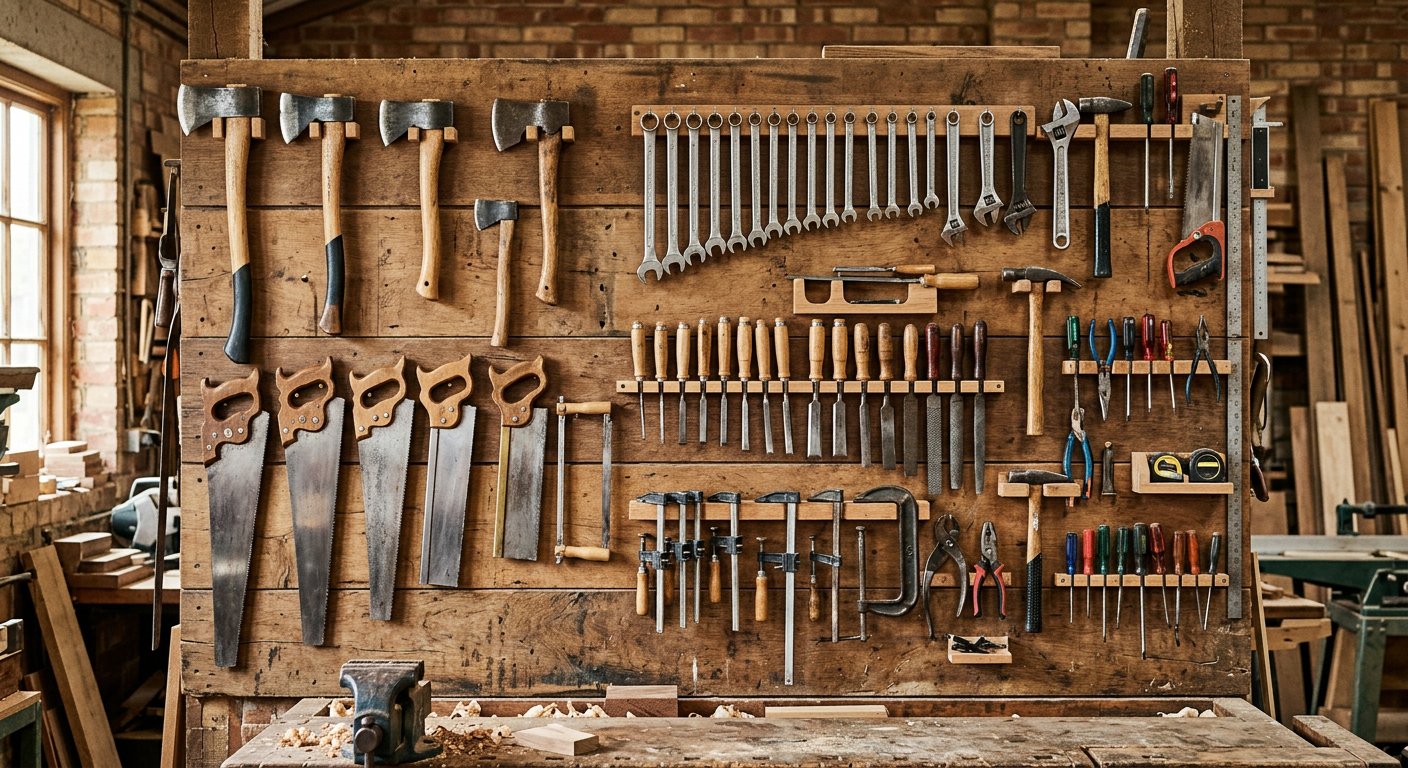
Everything off-grid breaks eventually, and the nearest hardware store or tradesperson is far away. The most valuable off-grid skill isn't any single task — it's the ability to maintain, repair and improvise. A small, well-chosen tool kit and the confidence to use it will save you more money than any other investment.
What you need to know
The concepts that underpin everything else in this skill.
- The core hand tools every off-grid home needs (and the ones you can skip).
- Power tool basics: battery platforms, safety, when 240V beats cordless.
- Routine maintenance schedules for water, power, heating and vehicles.
- How to sharpen and maintain edged tools (saws, axes, knives).
- Fasteners, glues, tapes and the art of the temporary fix.
- Basic mechanical and plumbing troubleshooting.
What you need to learn
A staged progression — master each level before moving on.
Beginner
- 01 Assemble a genuinely useful starter tool kit (and resist gadget-buying).
- 02 Safely use a drill/driver, circular saw and sander.
- 03 Sharpen a knife, axe and saw properly.
- 04 Read a manual and do scheduled maintenance on your gear.
Intermediate
- 01 Repair plumbing leaks and replace fixtures.
- 02 Service small engines (generators, chainsaws, mowers).
- 03 Do basic 12V electrical repairs safely.
- 04 Build and fix furniture and structures from timber.
Advanced
- 01 Diagnose and repair pumps, inverters and appliances.
- 02 Weld and do basic metalwork.
- 03 Maintain a vehicle (fluids, brakes, basic diagnosis).
- 04 Keep a well-stocked workshop and spares inventory.
Your next steps
A practical, ordered path from where you are now.
- 1 Build your starter tool kit from the core list — nothing exotic.
- 2 Learn to use and maintain each tool properly (safety first).
- 3 Set up a maintenance calendar for your systems.
- 4 Stock common spares and fasteners before you need them.
- 5 Practise repairing something small every month.