Track 07 of 09
Communications
Stay connected when there's no cell tower
Off-grid doesn't mean off-contact. The question is how you'll reach help in an emergency and stay connected for work, weather and family. Layers are the answer: cellular with a booster, satellite messaging, two-way radio, and knowing what actually works from your location.
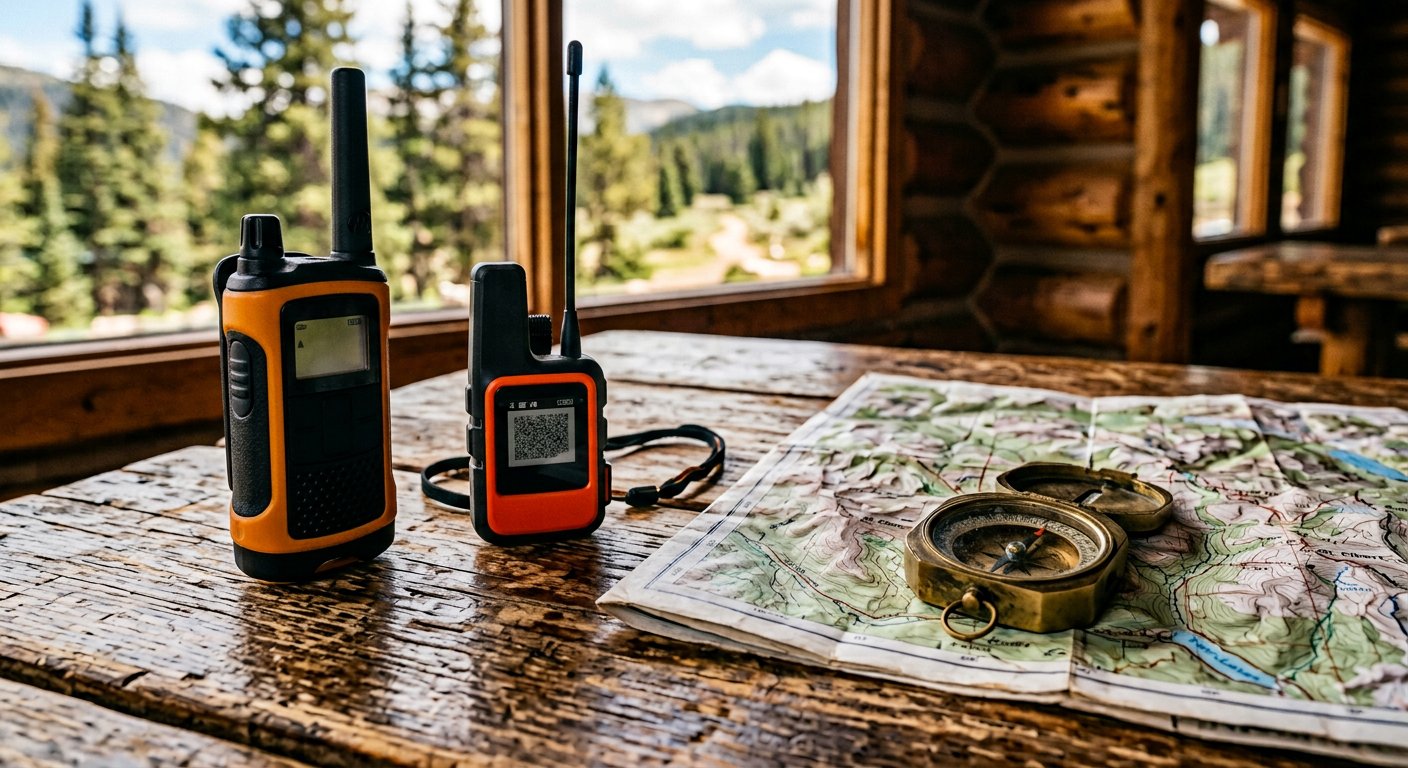
What you need to know
The concepts that underpin everything else in this skill.
- Your location's actual coverage: cellular, VHF/UHF repeaters, satellite visibility.
- The difference between satellite phone, satellite messenger (e.g. inReach) and satellite internet (e.g. Starlink).
- Two-way radio types: CB, GMRS/FRS, ham (amateur) radio — and licensing.
- Emergency signalling: PLBs, EPIRBs, and when to use them.
- Power budget: comms gear must run from your off-grid system.
- Getting weather and warnings without the internet.
What you need to learn
A staged progression — master each level before moving on.
Beginner
- 01 Test coverage at your site with your own devices.
- 02 Choose and use a satellite messenger for emergencies.
- 03 Understand the radio options you can legally use.
- 04 Set up a weather radio for alerts.
Intermediate
- 01 Install a cellular booster or external antenna.
- 02 Get licensed and operate ham or GMRS radios.
- 03 Build a 12V power supply for your comms gear.
- 04 Set up satellite internet for remote work.
Advanced
- 01 Run a reliable off-grid comms station (radio + data + backup power).
- 02 Use HF radio for long-distance comms when everything else is down.
- 03 Build redundancy: two independent ways to reach help.
- 04 Integrate monitoring (remote sensors, weather station).
Your next steps
A practical, ordered path from where you are now.
- 1 Map your site's real coverage and dead zones.
- 2 Establish at least two independent ways to reach emergency services.
- 3 Pick your everyday connection (booster, satellite, fixed wireless).
- 4 Learn the radio licensing path that fits your needs.
- 5 Test everything before you actually need it.