Track 09 of 09
Emergency Preparedness
Plan for the things that can actually go wrong
Preparedness isn't about the apocalypse — it's about the boring, likely scenarios: a storm that cuts power for a week, a bushfire warning, a broken water pump, a medical emergency an hour from help. Off-grid living already makes you more resilient; a clear plan makes you actually ready.
What you need to know
The concepts that underpin everything else in this skill.
- Your real risks: weather, fire, isolation, medical access, supply-chain gaps.
- The difference between everyday resilience and emergency response.
- First aid essentials and how far you are from definitive care.
- Shelter-in-place vs evacuation — when each applies.
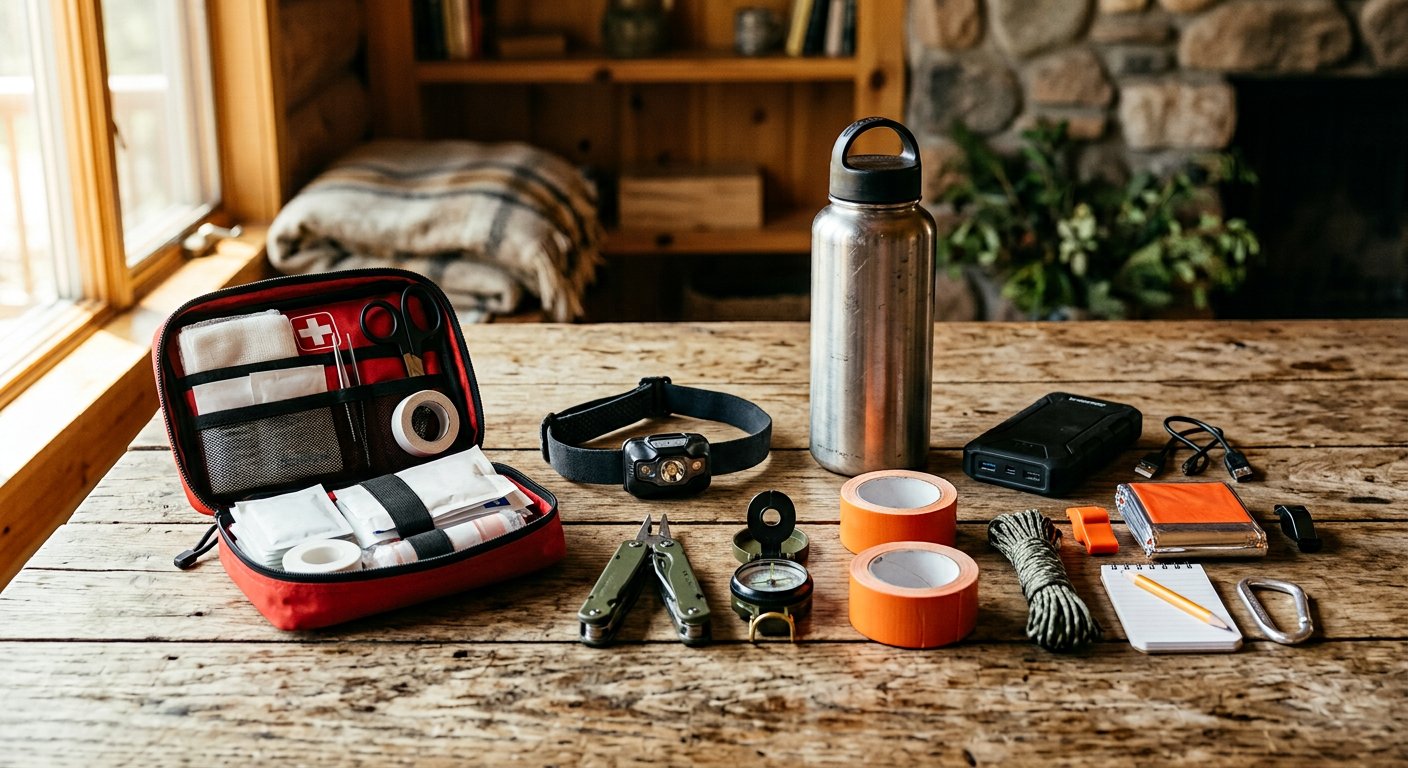
- What a realistic emergency kit actually contains (not a bunker).
- How off-grid systems fail, and your backups for water, power and heat.
What you need to learn
A staged progression — master each level before moving on.
Beginner
- 01 Write a simple emergency plan for your household.
- 02 Build a realistic 72-hour kit and keep it current.
- 03 Learn and refresh basic first aid + CPR.
- 04 Identify your evacuation routes and triggers.
Intermediate
- 01 Create defensible space and a bushfire/wildfire plan.
- 02 Build system redundancy (backup water, power, cooking).
- 03 Run a practice drill with your household.
- 04 Store and rotate food, water and medical supplies.
Advanced
- 01 Integrate community preparedness (know your neighbours).
- 02 Maintain long-term stores and a resilient property plan.
- 03 Get advanced first aid / wilderness first aid certification.
- 04 Rehearse and refine your plan annually.
Your next steps
A practical, ordered path from where you are now.
- 1 Assess your property's real, likely risks — not the movies.
- 2 Write a one-page household emergency plan.
- 3 Build your 72-hour kit and first aid capability.
- 4 Add redundancy to water and power first (they matter most).
- 5 Practise, then review your plan every year.