Getting Started · 12 min read
The Off-Grid Skills Roadmap: What to Learn First
A practical, ordered path from complete beginner to capable off-grid practitioner — the skills that matter most, in the order they pay off.
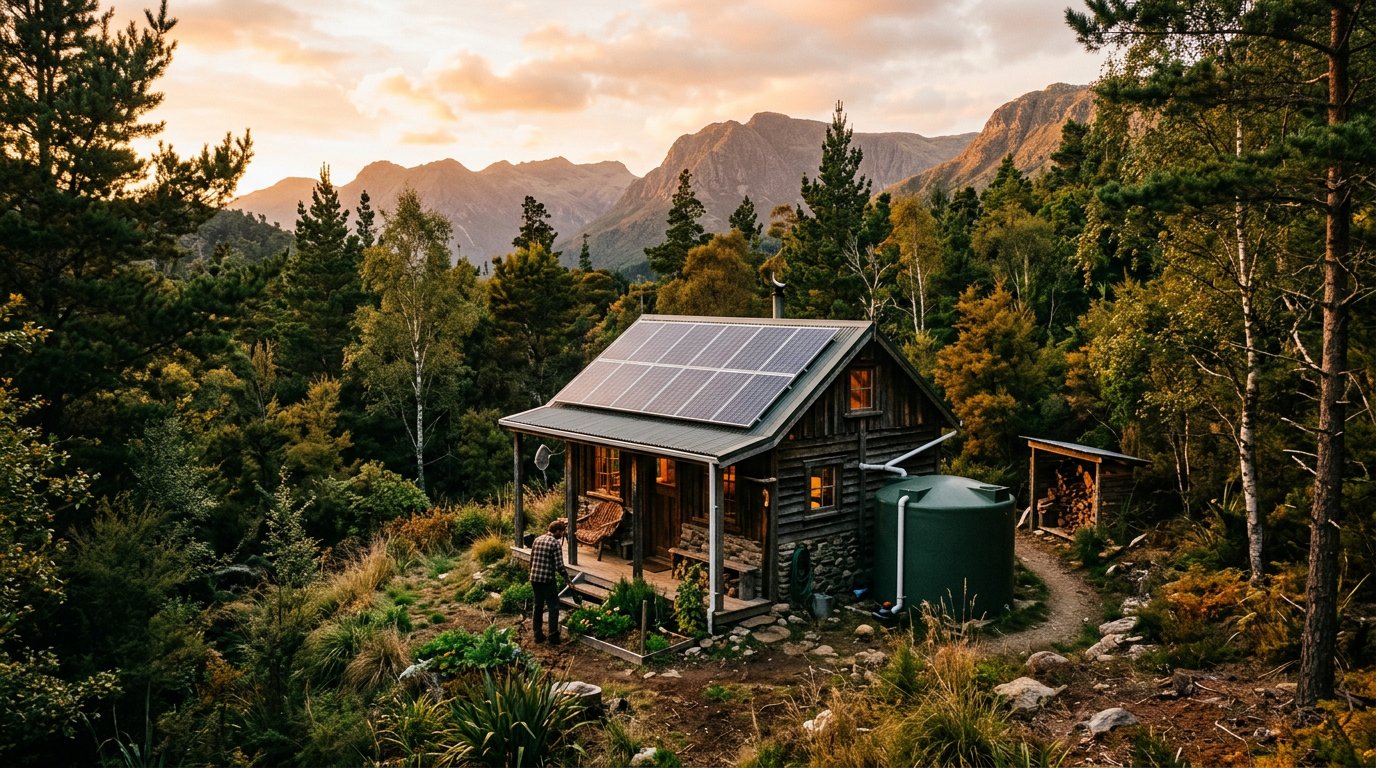
Every experienced off-grid homesteader agrees on one thing: the order you learn in matters more than how fast you learn. Spend your first months on the wrong things and you'll waste money, lose confidence, and possibly hurt yourself. Spend them on the right things and each skill makes the next one easier.
This is the sequence I'd give a friend who just bought land and doesn't know where to start. It mirrors the full roadmap on this site, with the reasoning behind each step.
Phase 1 — Assess before you acquire
The most expensive off-grid mistake is buying equipment before you understand your situation. Before a single panel, tank or stove:
- Measure your real energy use. A $20 plug-in watt meter, used for a week, tells you your actual daily watt-hours. Nearly everyone over- or under-estimates by 50% or more. Run the solar calculator with real numbers, not guesses.
- Learn your climate's numbers. Peak sun hours, annual rainfall, frost dates and fire risk are available free from your national weather service (NIWA, BOM, NOAA). Every system you build is sized by these.
- Know the rules. Building codes, electrical codes, water rights and septic regulations vary enormously. Find out what applies before you pour concrete.
The golden rule
Never buy a system for a problem you haven't measured yet.
Phase 2 — Water and shelter first
People romanticise solar panels, but the two things that will actually make you miserable or sick are water and shelter. A human can go days without power but not without clean water; a cold, damp, draughty home is misery in any climate.
Secure a water source (roof catchment, bore, spring or delivery) and its failure mode, then make it safe to drink. Get your structure dry, insulated and ventilated — and legal. This is also where the safety tiers matter most: plumbing, electrical and structural work often requires professionals.
Phase 3 — Power, sized honestly
Only now, with your load measured and your shelter up, do you size a power system. The four components — panels, charge controller, battery, inverter — are each sized from the others, so there's a correct order to the math (it's all in the solar sizing guide).
Learn DC wiring safety before you touch anything live: a battery bank can deliver hundreds of amps, and a dropped tool across terminals will weld itself and start a fire. Fusing, correct wire gauge and polarity are non-negotiable.
Phase 4 — Food, which compounds
Food self-reliance is the skill that compounds. Every season of soil you build, every jar you preserve, every seed you save makes the next year easier. Start with a productive garden and one preservation method, then build a rotating store using the food storage calculator.
Phase 5 — Resilience, not paranoia
Real preparedness is boring: redundant water and power, a 72-hour kit, a first-aid course, working comms, and knowing your neighbours. It's planning for the likely scenarios — storms, fires, equipment failure, a medical emergency an hour from help — not the movies.
The whole point
Off-grid living is not a list of products to buy. It's a set of skills you build in sequence, each one making you more capable and less dependent. Start small, measure honestly, and respect the work — the capability compounds faster than you expect.