Water · 14 min read
Rainwater Harvesting: Collection, Storage and the Law
Catchment math, first-flush diverters, tank sizing for dry seasons, filtration for potable use — and what's legal where you live.
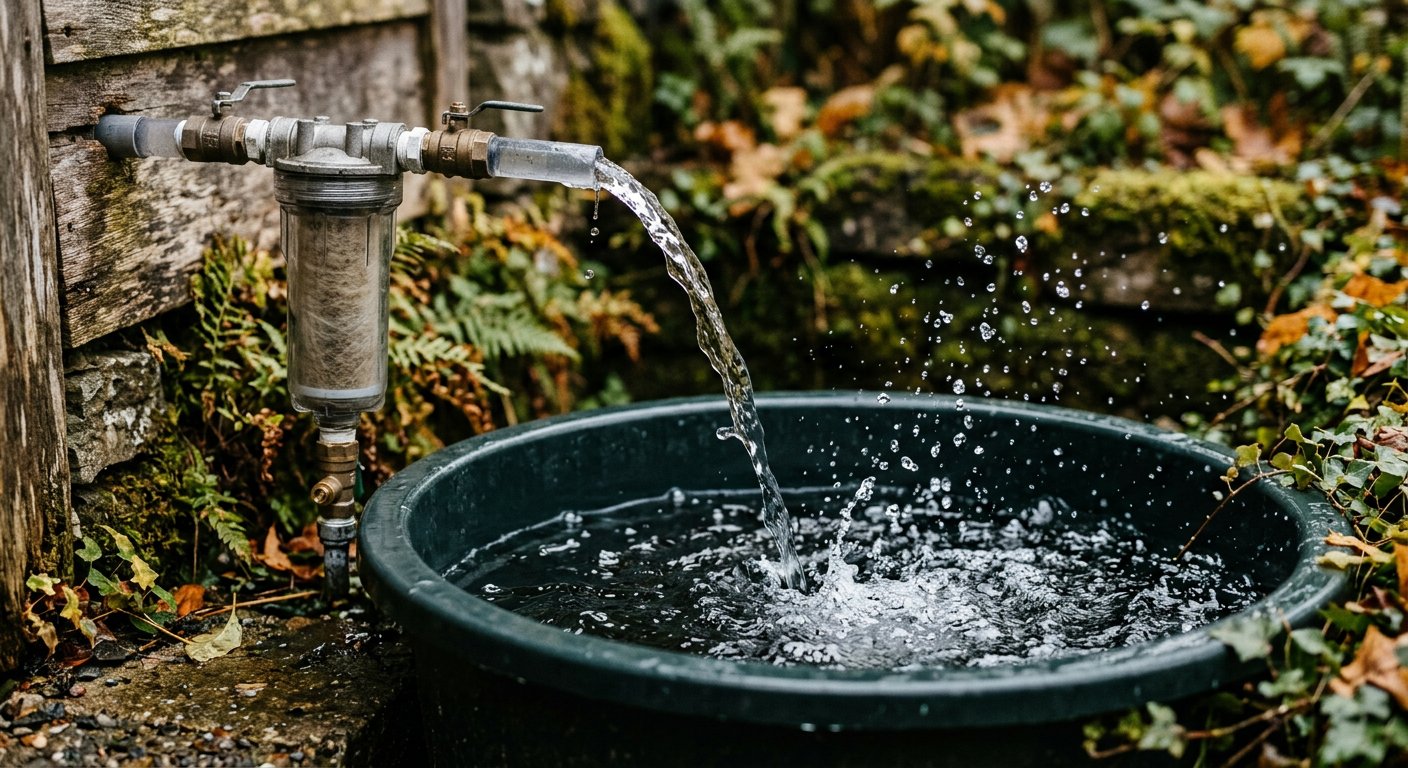
Rainwater is one of the cleanest water sources available — if you collect, store and treat it properly. For millions of off-grid and rural households it's the primary supply, and the math behind it is beautifully simple.
The one rule that matters
1 mm of rain on 1 m² of roof ≈ 1 litre of water.
That's the whole game. Annual harvest is simply:
Harvest (L/yr) = roof catchment area (m²) × annual rainfall (mm) × runoff coefficient
The runoff coefficient (≈0.9 for clean metal, ~0.8 for shingle, ~0.3 for a planted roof) accounts for what's lost to evaporation, splashing and first-flush diversion. Use the rainwater calculator to run your own numbers.
Keeping the water clean: first-flush & screens
The first rain after a dry spell washes dust, bird droppings and leaves off your roof. The two cheapest, highest-value upgrades are:
- Leaf guards / gutter screens — keep the bulk of debris out.
- A first-flush diverter — routes the first contaminated litres away from the tank before clean water flows in.
Combined with an opaque, sealed tank (light and air promote algae and insects), these keep your stored water in good condition with minimal effort.
Sizing your tank for the dry season
The most common error is sizing a tank to the annual average rainfall and then running dry every summer. Rain is seasonal. Size for your longest expected dry period:
Tank size (L) = daily demand (L) × dry days of autonomy
A household using 150 L/day that wants 60 days of autonomy needs a ~9,000 L tank — and more if the catchment can't refill it. Check your local met service for the dry-season rainfall, not just the yearly total.
From roof to tap: filtration and purification
"Filtration" and "purification" are not the same thing:
- Filtration removes particles (sediment, rust, some parasites) — a sediment filter followed by a carbon filter is standard.
- Purification kills or removes pathogens (bacteria, viruses, protozoa) — typically UV light or chlorination for a whole house, or a certified filter for drinking water.
Roof water can carry Salmonella and Campylobacter from bird droppings. If you're drinking it, treat it — see the water safety guide for the full picture.
Is rainwater harvesting legal?
In most places, yes and actively encouraged — but rules vary and are worth checking before you build:
- New Zealand & Australia: legal and common; some areas require tanks for new builds.
- United States: legal in most states, with water-rights caveats in a few western states (notably Colorado's historical restrictions) and some local codes on potable use.
- UK / Europe: broadly permitted for non-potable use; potable systems may need approval.
Check your local council or water authority — plus any rules on tank set-backs, overflow and backflow prevention (you must not contaminate a shared supply).
Safety
Never connect a rainwater system to mains water without a licensed plumber and backflow prevention. Test stored water before drinking it, and maintain your roof, gutters and tank — the quality of the water depends on the cleanliness of the whole chain.