Getting Started · 10 min read
Off-Grid Living: Benefits, Challenges and a Practical Reality Check
A clear-eyed way to decide whether off-grid living fits your site, budget, skills and support network, with a practical first-month plan before you commit.
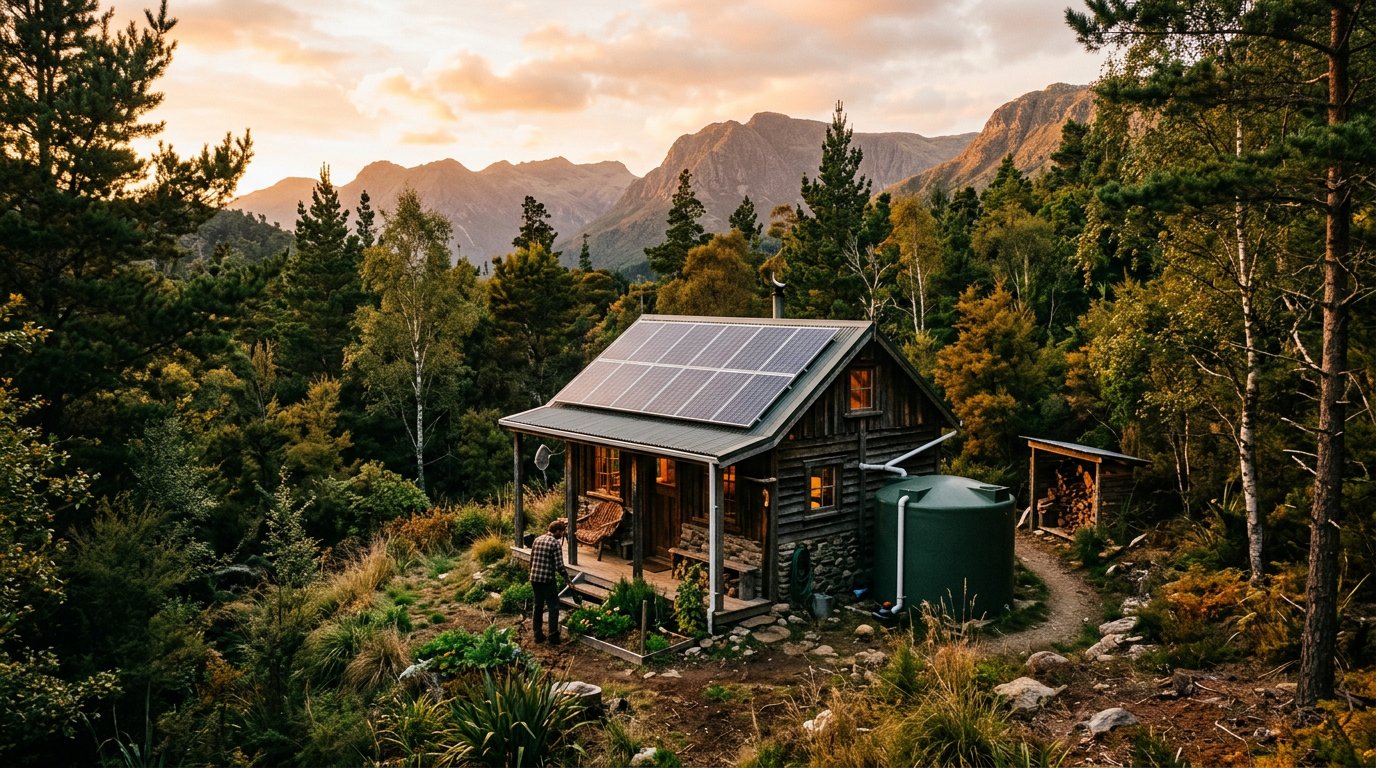
Off-grid living is not a single purchase or a single definition. It is a household taking responsibility for the systems that normally arrive through a utility bill: power, water, waste, heating, food, communications and maintenance. That can be deeply satisfying. It also turns ordinary inconveniences into problems you need to diagnose.
The useful question is not "could I live off grid?" Nearly everyone could with enough money, time and support. The better question is whether the trade-offs suit your place, household and appetite for hands-on work. Use this guide as a reality check before buying land or committing to a complete system.
What off-grid living actually asks of you
A resilient setup does not need to do everything at once. It does need a plan for every essential service. For example, solar power without a measured load and a backup plan is not energy independence. Rainwater without enough storage, treatment and a dry-season plan is not water security. Start by mapping how each need is met today, what could fail, and who will maintain the replacement system.
- Energy: generation, storage, efficiency and a plan for poor weather.
- Water: source, collection, treatment, storage, distribution and backup.
- Shelter and heat: a dry, ventilated structure that suits the local climate.
- Food: a realistic mix of growing, preserving, purchasing and storage.
- Waste and sanitation: a safe, legal system that can be serviced.
- Access and support: transport, communications, medical care, neighbours and trades.
The benefits that stand up to a reality check
More control over the systems you rely on
Building and maintaining your own systems makes their limits visible. You learn where energy goes, how much water a household actually uses and which supplies run low first. That awareness often leads to a simpler, less wasteful home even if you remain connected to some utilities.
Useful, compounding skills
A load audit, a garden bed, a water filter test or a maintenance routine all create capability you keep. Start small and the learning compounds. The goal is not to become an expert at everything. It is to know what you can safely do, what you need to learn, and when to bring in a qualified professional.
Resilience through sensible redundancy
The practical attraction is not isolation. It is having more than one way to meet a critical need. A stored supply of water, an alternative cooking method, a way to contact help and a well-maintained backup power source make a household more capable during an outage, storm or supply interruption.
The challenges that deserve a plan, not optimism
Upfront cost and eventual replacement
Independent systems move costs rather than remove them. Batteries age, pumps fail, filters need replacing and roofs, tanks and access tracks need maintenance. Include replacements, spares, delivery and labour in your budget, not just the first install.
Seasonality and site limits
Your least favourable season sizes the system. Low-sun weeks, drought, frost, wildfire risk, access constraints and local water rules all matter more than an annual average. Measure your real energy use before sizing power, and work out water demand before choosing a tank.
Time, maintenance and responsibility
Off-grid systems reward attention. You will monitor use, clean filters, rotate food, check batteries, repair leaks and keep records. That work can be rewarding, but it is still work. Plan for sickness, travel and the days when you do not have the time or energy to fix something yourself.
Safety and legal boundaries
Electrical, structural, potable-water and wastewater work can require permits, inspection or licensed professionals. Check the rules that apply to your site before purchasing equipment or starting work. Our safety guide explains the boundary between DIY learning and professional work.
A 30-day decision process
- Write the brief. List who will live there, the must-have services, budget, time available and what "off grid" means for your household.
- Measure current use. Record electricity and water use for a normal week. Do not size a system from guesses.
- Research the actual site. Check sun, rainfall, water source, access, fire exposure, soil, climate and local approvals.
- Map failure modes. For every critical service, write what happens when it fails and how you will recover.
- Start with one reversible project. A garden, rainwater barrel, small solar load or food-storage plan will teach more than a shopping list.
Start with a system, not a leap
You do not need to sever every utility connection to build genuine capability. Begin by reducing one dependency, learning the maintenance behind it and proving that the system works through a difficult season. That is a safer route to confidence than trying to install a complete homestead all at once.